
There’s a simple routine you follow to extend your wig’s life: you use gentle sulfate-free shampoo, avoid high heat styling, detangle with care, store on a wig stand, and schedule professional touch-ups.
Identifying Custom Wig Types and Fiber Composition
Identify your custom wigs by testing texture, shine and reaction to water: human hair will darken and soften when wet and tolerate low heat, while synthetic fibers often repel water and retain set curls. Consult the table below for quick comparisons and use the checklist to confirm fiber type.
| Wig Type | Fiber / Notes |
|---|---|
| Custom Wigs | Human hair – dyeable, heat-styling capable |
| Synthetic | Synthetic fibers – low heat tolerance, hold style |
| Lace front | Natural hairline, delicate lace |
| Full lace | Versatile parting, requires careful cap maintenance |
- Feel strands to spot human hair vs synthetic fibers
- Inspect roots and knots for lace front indicators
- Note shine and spring-back to identify fiber type
Compare practical tips in A Beginner’s Guide to Wig Maintenance and Styling – Glamour for hands-on checks and visual cues.
Maintenance Nuances for Human Hair vs. Synthetic Fibers
Understand that human hair lets you restyle and color, so you must use sulfate-free products and gentle heat settings to avoid heat damage. You should treat it like your natural hair when cleansing and deep-conditioning.
Treat synthetic fibers by avoiding direct heat and using detangling sprays designed for synthetics; hot tools will cause irreversible melting or frizz. You will extend life by washing less frequently and storing on a form.
Understanding Lace and Cap Construction Varieties
Examine cap types: monofilament gives realistic parting, lace fronts deliver a natural hairline, and full lace enables versatile styling but needs more delicate handling to prevent fragile lace tears.
Inspect adhesives and elastic bands on the cap; excessive glue can weaken lace and straps, so you should remove residue with proper solvents and avoid aggressive pulling that can cause damage.
Knowing how each construction behaves lets you adjust cleaning frequency, adhesive use and nightly storage to maximize longevity.
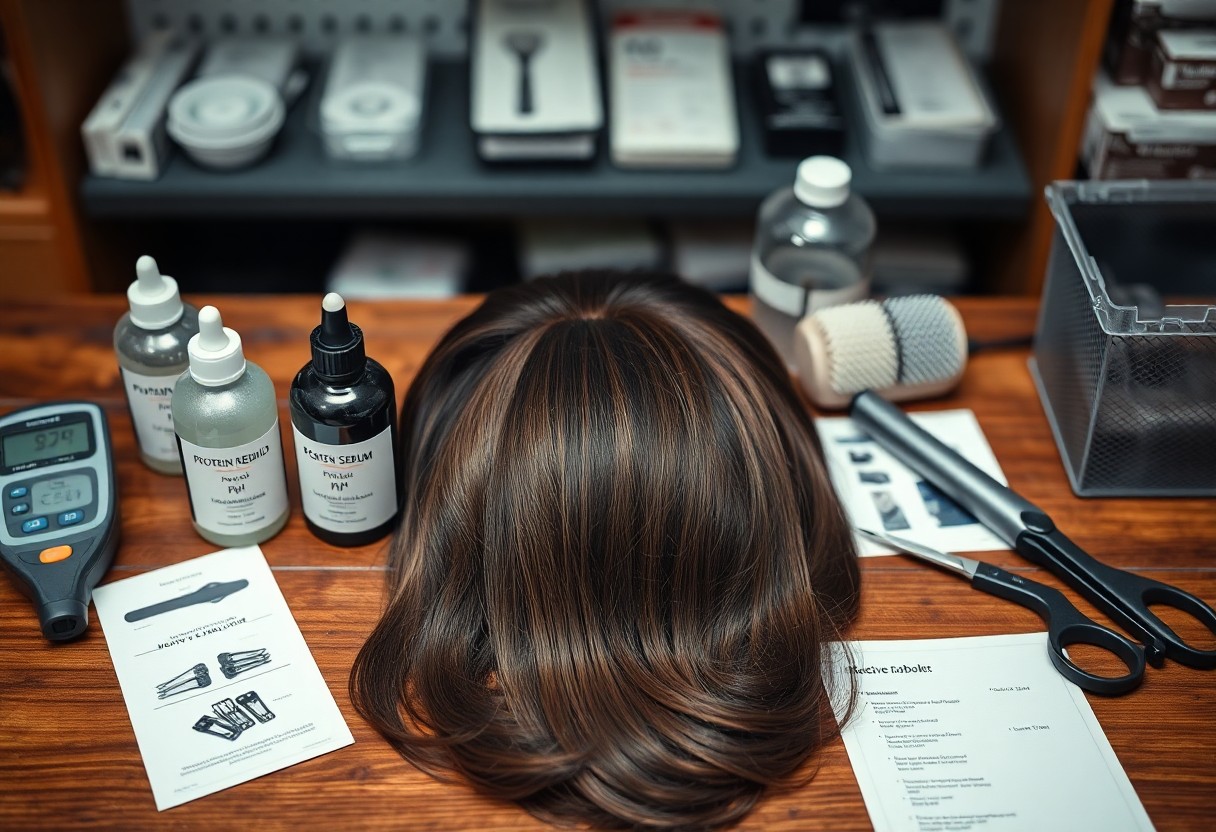
Pros and Cons of Specialized Maintenance Products
You will notice that specialized products deliver deeper cleansing, targeted conditioning, and formulae designed for synthetic or human hair blends so you get longer wear and fewer repairs.
Specialized options can also carry trade-offs: higher cost, specific application steps, and some formulas can damage delicate fibers if used incorrectly, so selection and technique matter for long-term use.
Pros and Cons
| Pros | Cons |
|---|---|
| Extends wig lifespan | Higher upfront cost |
| Formulated for fiber type | Risk of fiber damage if misapplied |
| Reduces tangling and frizz | May require dilution or special tools |
| Professional sealants lock style | Stronger chemicals can irritate skin |
| Less frequent washing needed | Potential residue build-up if overused |
| Consistent, predictable results | Limited availability in some areas |
| Preserves color and shine | Not all products suit every cap or knot type |
| Often antimicrobial | Requires correct storage and handling |
Benefits of Professional-Grade Cleansers and Sealants
Professional-grade formulas give you concentrated action that removes oils and styling residues without stripping important moisture, so the wig keeps its texture and movement longer.
Sealants and conditioners designed for wigs provide a protective layer that preserves knots and reduces shedding, helping you maintain appearance and fit with fewer touch-ups.
Limitations of Standard Retail Hair Care Solutions
Retail shampoos and conditioners are made for natural hair and often contain silicones or sulfates that can cause buildup, matting, or fiber weakening when used repeatedly on wigs.
Many over-the-counter products lack the pH balance and gentle surfactants that wig fibers need, which can lead to faster wear and loss of style definition.
Avoid using general clarifying or alcohol-heavy products on wigs; you should patch-test any retail item and prioritize labels that specify use on synthetic or human hair wigs to prevent premature damage.
Step-by-Step Guide to Cleaning and Deep Conditioning
| Pre-Wash Detangling and Preparation Protocols | Proper Rinsing, Drying, and Moisture Retention |
|---|---|
Pre-Wash Detangling and Preparation ProtocolsBegin by placing your wig on a stand or towel and gently detangling with a wide-tooth comb, working from the ends toward the base so you don’t stress the cap. Apply a light detangler to stubborn knots and secure lace or clips to preserve the hairline before any water contact. |
Proper Rinsing, Drying, and Moisture RetentionRinse with lukewarm water until suds run clear, keeping the flow gentle and avoiding hot water which can warp fibers and loosen adhesives; you should avoid vigorous rubbing that causes tangles. Use a sulfate-free shampoo and finish with a deep conditioner on human-hair wigs. Pat excess water with a microfiber towel and set the wig on a stand to air-dry, reshaping the cap and detangling gently while damp; you should not use high heat styling until fully dry, and you can apply a light leave-in conditioner or serum to retain moisture without weighing the hair down. |
Final Words
Ultimately you extend your custom wig’s lifespan by keeping a consistent care routine: gentle cleansing, minimal heat, correct storage, and scheduled professional checkups. You should use breathable adhesives, shield fibers from sun and friction, and adjust the fit to maintain comfort and shape. For product picks and step‑by‑step guides consult Hair Loss Blog, Confidence Tips & Guides | Silkopulence.
FAQ
Q: How often should I wash a custom wig and which products work best?
A: Washing frequency depends on fiber type and how often the wig is worn. Human-hair wigs typically need washing every 7-12 wears or every 2-3 weeks if worn frequently; synthetic wigs usually need washing every 10-15 wears or when they start to look dull or feel sticky. Use a sulfate-free, gentle shampoo and a moisturizing conditioner for human hair; use a wig-specific shampoo and conditioner formulated for synthetic fibers on synthetic wigs. Rinse in lukewarm water, gently blot excess water with a towel, and air-dry on a wig stand away from direct heat and sunlight. Deep-condition human-hair wigs once a month with a professional mask, and avoid clarifying or protein-heavy treatments unless recommended by a stylist.
Q: What styling practices preserve the lifespan of a custom wig?
A: Minimize heat exposure and always use a high-quality heat protectant on human-hair wigs before styling. Set tools to low or medium heat and test on a hidden section first; use ceramic or tourmaline tools for even heat distribution. For synthetic wigs, use only heat-safe fibers and low-heat styling tools designed for synthetics, or choose heat-free styling methods such as rollers. Detangle from ends to roots using a wide-tooth comb or a loop brush, and avoid brushing wet human-hair wigs aggressively. Apply styling products sparingly to prevent buildup and switch to water-based, alcohol-free products that rinse out easily.
Q: What is the best way to store a custom wig to prevent damage?
A: Store wigs on a breathable wig stand or mannequin head to maintain shape, or lay them flat in a satin or silk bag for long-term storage after braiding or loosely twisting the hair to prevent tangles. Keep storage out of direct sunlight and away from humid or damp areas to prevent color fading and mildew. Use acid-free tissue paper to pad areas like the crown and to protect the lace front, and include a silica gel packet in storage boxes to control moisture. Avoid sealed plastic bags for long periods because trapped moisture can damage fibers and the cap.
Q: How should I maintain lace fronts, adhesives, and the wig cap to extend longevity?
A: Clean lace gently after each use by removing adhesive residue with a dedicated, gentle adhesive remover that does not contain harsh solvents; dab the lace with a soft cloth rather than rubbing vigorously. Keep the lace and hairline dry when using oil-based makeup or heavy creams to prevent breakdown of adhesive bonds. Alternate adhesive types or give bonds recovery time by rotating adhesive use and removing the wig nightly when possible. Inspect the cap and wefts regularly for stretched elastic, loose stitching, or thinning; take the wig to a professional for re-tacking, re-wefting, or cap repair as soon as issues appear rather than attempting extensive fixes at home.
Q: How do I handle common problems like tangling, shedding, odor, and color fade?
A: For tangling, detangle gently starting at the ends and work up to the roots, use a silicone-based detangler for human hair and a wig-specific conditioner spray for synthetics, and avoid sleeping in wigs unless they are secured with a satin scarf. For shedding, limit rough brushing when the wig is wet, avoid backcombing near wefts, and check knot integrity; persistent heavy shedding should be evaluated by the maker. For odors, air the wig on a stand after use, wash with a gentle cleanser when needed, and use a light fabric or wig freshening spray; avoid masking smells with heavy perfumes that can cause product build-up. For color fade, store away from UV light, use color-safe products on human hair, and consider professional re-coloring rather than home dyes to maintain fiber health.